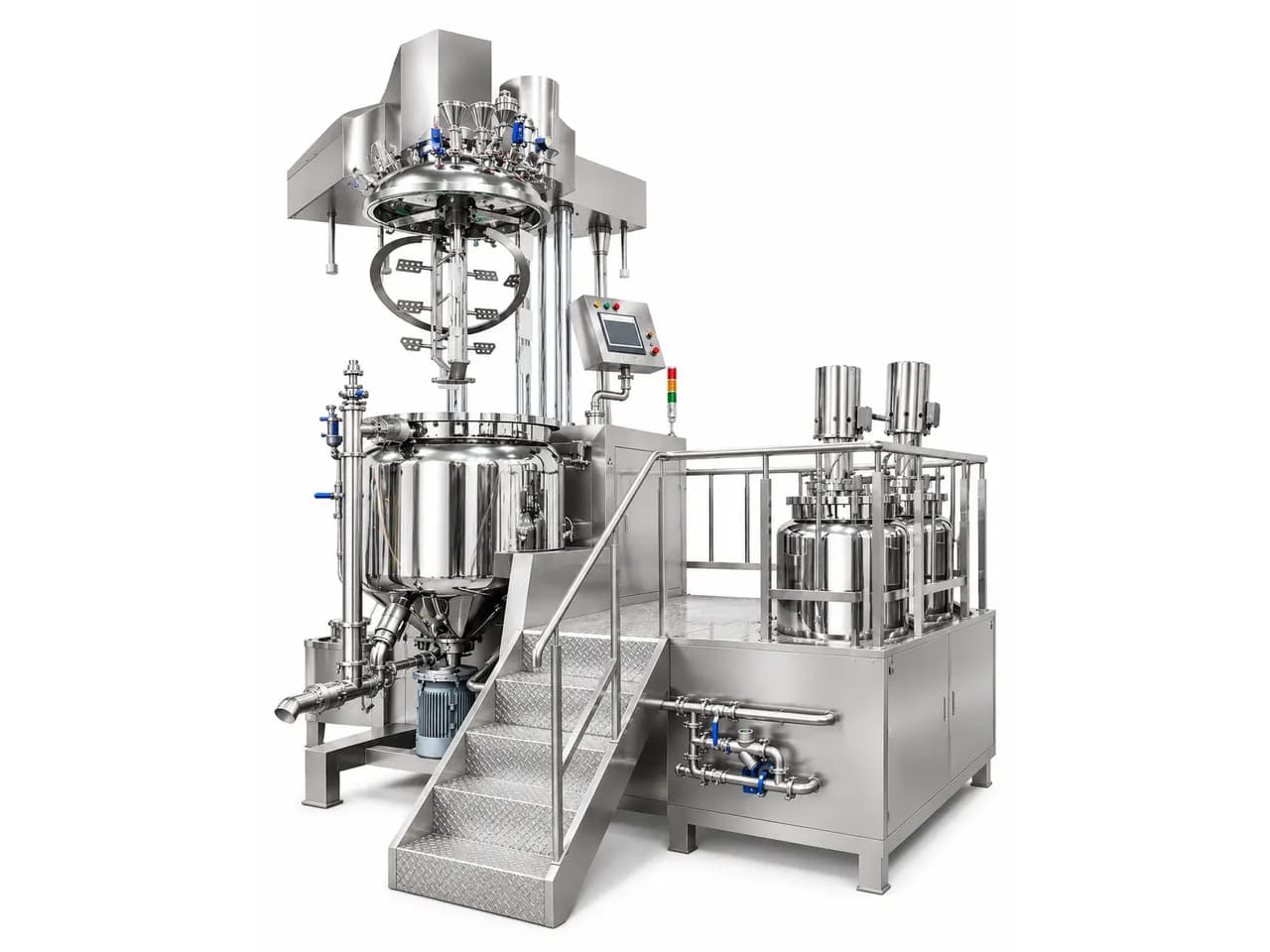
How to Choose a Vacuum Homogenizing Emulsifier: 200L vs 500L
Learn how to choose between 200L and 500L vacuum homogenizing emulsifiers for cosmetic cream and lotion production. Compare capacity, processing needs, equipment configuration and key factors before purchasing.
Published: Updated:
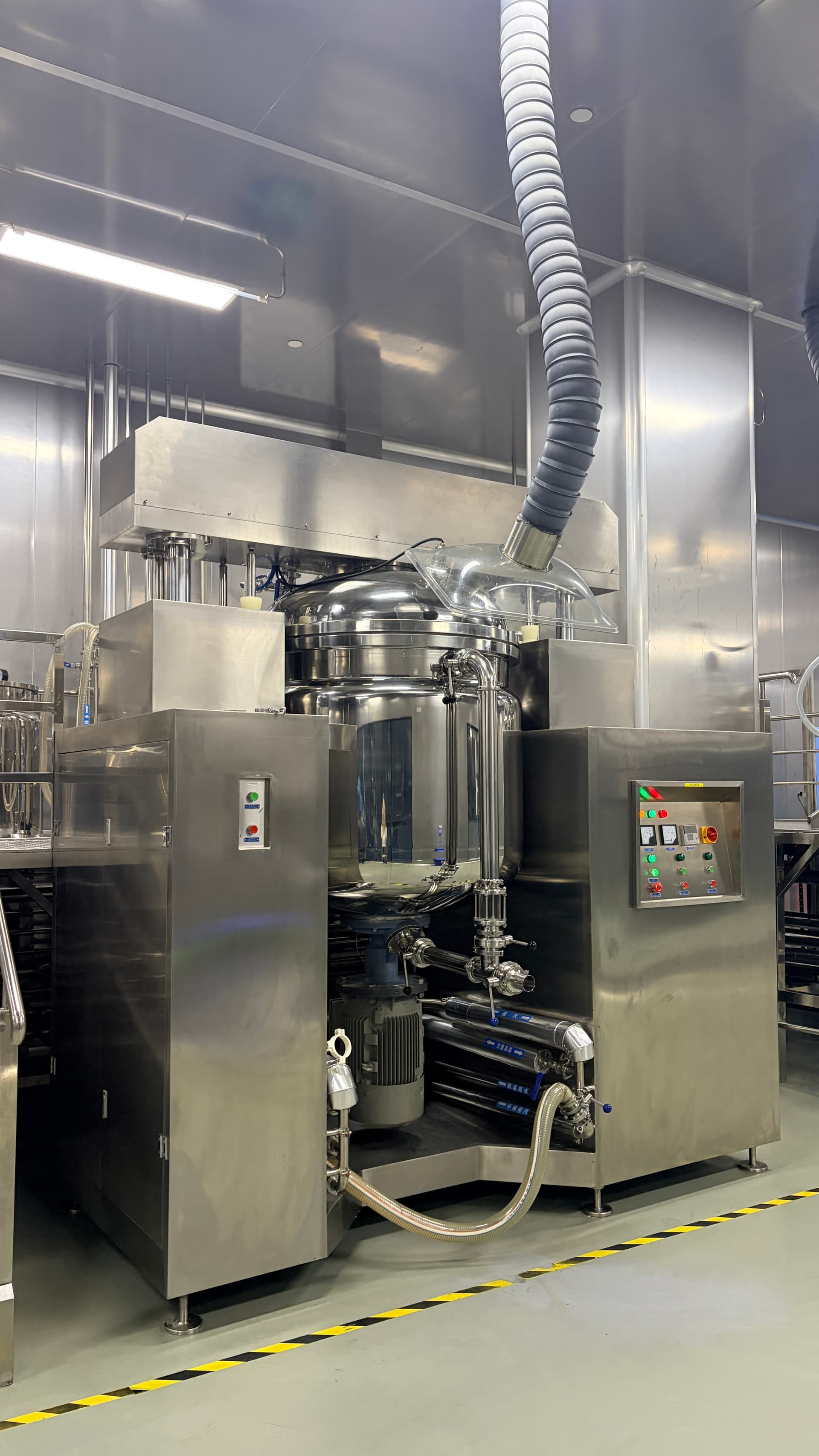
How to Choose a Vacuum Homogenizing Emulsifier: 200L vs 500L
Choosing a vacuum homogenizing emulsifier is an important step when planning or expanding a cosmetics manufacturing operation.
Whether you produce facial creams, body lotions or other emulsified skincare products, choosing the right equipment involves more than comparing tank capacities.
This guide explains the main factors to consider when evaluating 200L and 500L emulsifying equipment.
1. Understand Your Cosmetic Production Requirements
Before selecting a vacuum emulsifier, start with the product you intend to manufacture.
Different cosmetic formulations may have different requirements for mixing, homogenization, viscosity and temperature control.
Consider the following:
- Product type: facial cream, body lotion or other emulsified products
- Material viscosity and formulation characteristics
- Required batch capacity
- Heating and cooling requirements
- Target daily production volume
- Cleaning requirements
- Available factory space and utilities
The equipment configuration should match the actual production process rather than simply the nominal tank capacity.
2. 200L vs 500L Vacuum Homogenizing Emulsifier
A 200L machine and a 500L machine may serve different production requirements.
200L Vacuum Homogenizing Emulsifier
A 200L emulsifier can be considered for smaller batch requirements, product development or manufacturers producing several formulations in relatively limited quantities.
Ruiyang Machinery offers a hydraulic-lift vacuum homogenizing emulsifier series that includes a 200L model.
The hydraulic lifting mechanism provides access to the processing vessel. Specific mixing, homogenizing, heating and control configurations should be confirmed for the selected machine.
500L Vacuum Homogenizing Emulsifier
A 500L emulsifier can be considered when a manufacturer requires larger batches.
Ruiyang Machinery also offers a fixed-type vacuum homogenizing emulsifier series that includes a 500L model.
When evaluating a larger system, manufacturers should consider production cycle time, material handling, floor space, equipment configuration and factory utility requirements.
200L vs 500L: Key Differences
Nominal Capacity
- 200L model: 200 liters
- 500L model: 500 liters
Production Requirements
- 200L: May suit smaller production batches and frequent formulation changes.
- 500L: May suit manufacturers requiring larger batch quantities.
Equipment Configuration
- 200L: Hydraulic-lift configuration available.
- 500L: Fixed-type configuration available.
Factory Requirements
Both models require confirmation of installation space, electrical supply, heating and cooling arrangements.
Important: Nominal tank capacity does not automatically equal usable working volume or daily production output.
Actual performance depends on the formulation, processing cycle and equipment configuration.
3. Evaluate the Mixing and Homogenizing Systems
Mixing and homogenization serve different purposes in cosmetic production.
The mixing system combines and circulates ingredients, while a high-shear homogenizing system can support emulsification and dispersion processes.
Before purchasing, confirm the following technical information:
- Mixing motor power
- Homogenizer motor power
- Available operating-speed ranges
- Mixing and homogenizing structure
- Suitability for the intended viscosity
- Cleaning and maintenance arrangements
These specifications should be confirmed using the technical documentation for the selected model.
4. Consider Vacuum, Heating and Cooling
Vacuum processing may be useful when a formulation requires controlled air removal or reduced air incorporation.
Heating and cooling systems may also be necessary for ingredients that require specific processing temperatures.
Depending on the machine configuration, heating may involve electricity or steam, while cooling may require a suitable water supply.
Always confirm the available functions and factory utility requirements before finalizing equipment selection.
5. Think About the Complete Production Line
A cosmetic manufacturing process often involves more than the emulsifier itself.
Depending on the finished product and packaging format, additional equipment may include:
- Purified-water treatment equipment
- Preparation and mixing vessels
- Product holding or storage tanks
- Liquid or cream filling machines
- Capping equipment
- Labeling and coding machines
- Packaging and conveying systems
Planning these stages together helps manufacturers select compatible equipment and prepare an appropriate factory layout.
6. What Information Should You Provide for a Quotation?
When contacting a machinery supplier, prepare the following information:
- Cosmetic product type
- Required batch capacity
- Expected daily output
- Product viscosity or a representative sample
- Heating and cooling requirements
- Factory voltage and available utilities
- Desired automation level
- Packaging requirements
Providing this information helps the supplier recommend a suitable model and prepare a more relevant technical proposal.
Conclusion
Choosing between a 200L and 500L vacuum homogenizing emulsifier is not simply a matter of selecting a larger tank.
The correct choice depends on your formulation, production targets, processing conditions and available factory resources.
A clear understanding of these requirements helps reduce the risk of choosing equipment that does not match your manufacturing process.
Discuss Your Cosmetic Production Project
Ruiyang Machinery supplies vacuum homogenizing emulsifiers, mixing vessels, filling equipment and related production-line machinery for cosmetics and personal-care manufacturing.
Explore our Hydraulic Lift Vacuum Homogenizing Emulsifier or contact Ruiyang Machinery to discuss your equipment requirements.